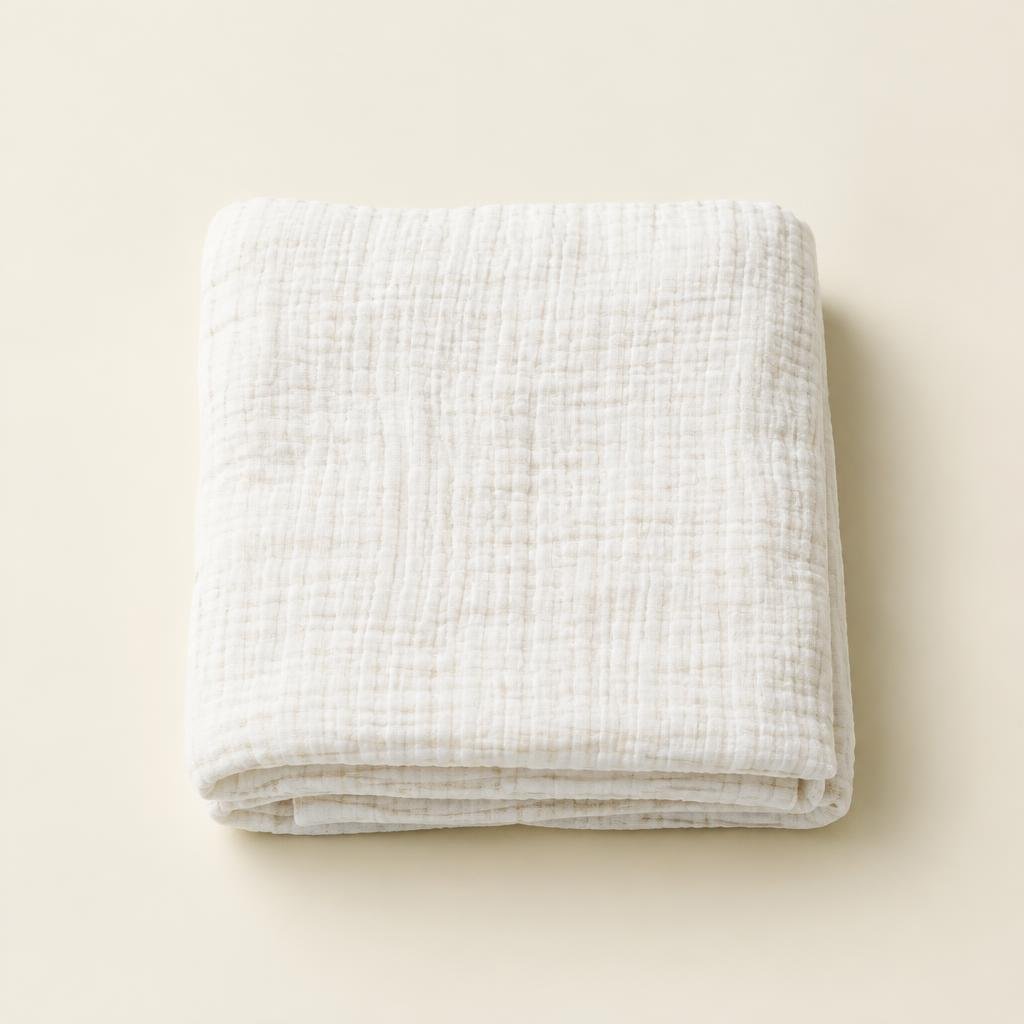
Muslin is a loosely woven cotton, and that open weave is what gives it a light, textured feel. It tends to get softer with every wash, which is why many people prefer a muslin blanket that has been laundered a few times. It folds small, so it fits easily in a bag.
Knit blankets are a different thing. They stretch and feel thicker, and they can be cozy for a stroller or a lap. They are not as light as muslin, and they can snag, so they suit slower, calmer use.
We make organic cotton baby clothes and swaddle blankets here in Minneapolis, so this is a question we think about a lot. Both fabrics have a place. The trick is knowing what each one does well, and what it asks of you in return.
How the Weave Works
The difference starts with how the cloth is made. Muslin is woven, which means threads cross over and under each other at right angles. When the threads sit loosely, air moves through easily. That is why muslin feels light in the hand and drapes so freely over an arm.
Knit fabric is built from loops, the way a sweater is. Each loop pulls on the next one, which gives knit its stretch and its bounce. That stretch is pleasant to hold and feels soft against the skin, but it also means the fabric has more bulk and more weight than a woven cloth.
Because of those loops, a knit can catch on a ring, a rough fingernail or a zipper. A pulled loop leaves a small tug in the surface. Woven muslin is far less likely to do this, though a very loose weave can fray at the edges if it is not hemmed well.
It helps to think of weight too. A knit holds its shape and sits more heavily, which some people love for a slow afternoon on the sofa. Muslin moves and flutters. If you want something you can flick open in one motion, the woven cloth is the easier partner.
What to Look For
A swaddle blanket is usually a generous square, because you need enough fabric to wrap and tuck. When you are choosing one, hold the fabric up to the light. A good muslin should look airy but not so thin that you see straight through it.
Check the edges and the corners as well. Neat, flat hems wear better than rolled or puckered ones, and they lie smoothly when you fold the blanket. Pull gently on the cloth in both directions. Muslin should hold its shape, with only a little give along the diagonal.
A size that feels too big in the shop is often just right at home. A square with room to spare lets you wrap snugly, then still has enough left over to tuck the end. A small square tends to come undone, and then you end up using a second cloth to finish the job.
With knits, look at the surface. A tight, even stitch usually holds up better than a loose, open one. Run a hand across it and look for any thin patches. A knit that already looks stretched in the shop will only look more stretched after a few weeks of use.
Everyday Uses
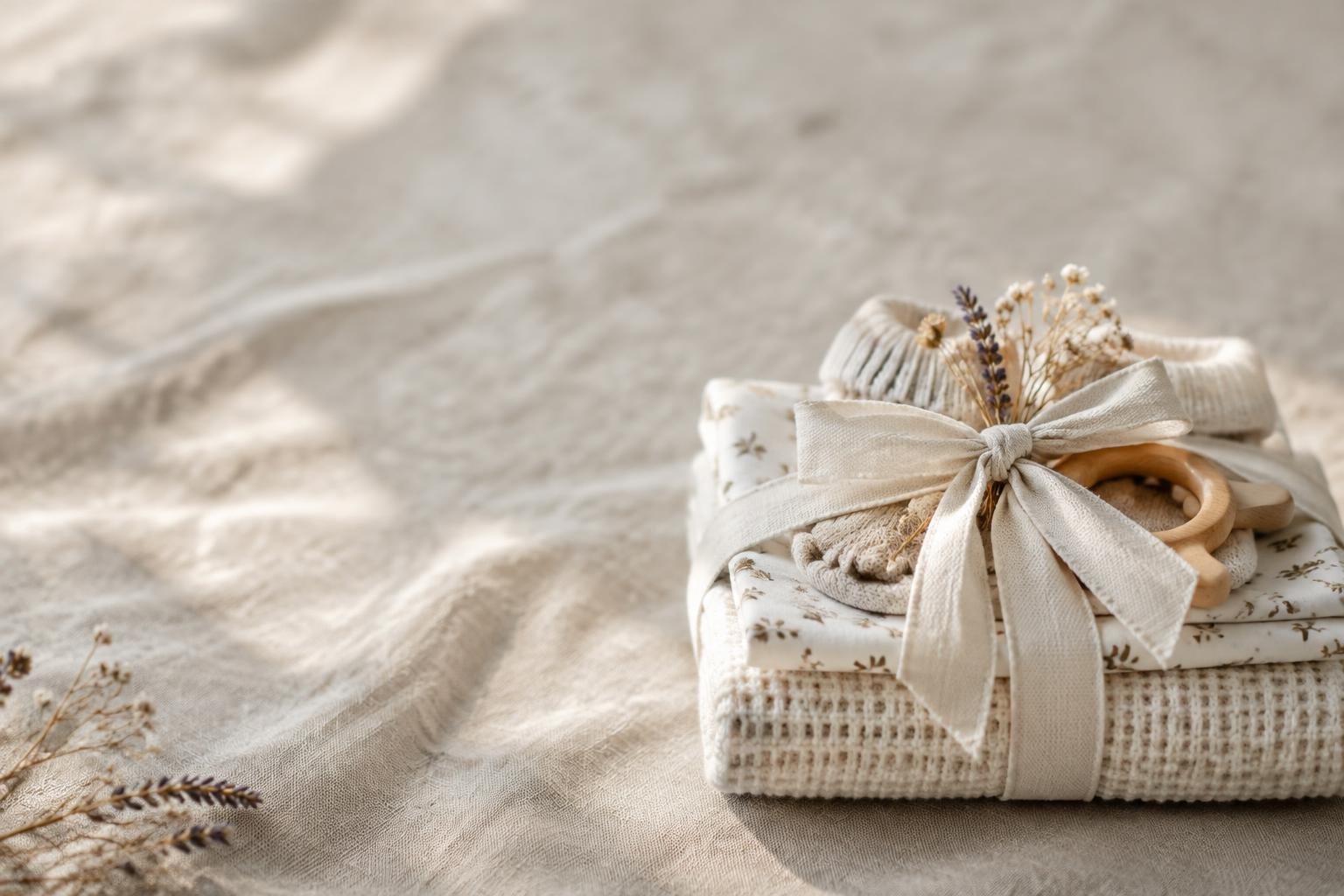
Muslin does much more than swaddle. It works as a light cover over a stroller, a nursing cloth, a play mat for the floor or a simple wrap for a gift. One blanket often ends up doing several jobs through the day.
That range is a good reason to buy more than one. A cloth that has been used as a floor mat in the morning can be washed and ready to wrap by evening, because muslin dries quickly. Its thin weave does not hold water the way a thick fabric does.
Knit blankets tend to have a narrower job. They shine when you want something warm and plush for a lap or a stroller ride, and they feel lovely to hold. But because they are heavier and slower to dry, most people do not stretch them across as many uses.
That is not a flaw, only a trade-off. A fabric that does one thing very well can be worth having, as long as you know what that thing is. Many families end up with a pile of muslin for the daily work and one or two knits for the quiet moments.
Color and Care
Color and pattern are mostly a matter of taste. Plain white or natural muslin goes with everything and shows up well in photos, while printed versions add some character. Plant-based dyes give soft shades rather than loud ones.
Soft shades also age gracefully. Bright, heavy colors can look worn once they fade, but a gentle tone simply mellows over time. If you plan to pass a blanket along, a quiet color is easier to keep looking good, and it suits whoever uses it next.
To care for muslin, wash it on a gentle cycle and dry it on low or on a line. The first wash may change the texture slightly as the weave relaxes. After that it settles into a soft, crinkled finish.
A few habits help any natural fabric last. Wash darker and lighter pieces apart for the first few loads, and skip harsh stain removers that can wear down the fibers. Shake the cloth out before folding, and do not leave it crumpled and damp, since that can leave it smelling stale.
Knits ask for a little more care. Dry them flat or on low heat so they keep their shape, and avoid hanging them wet, because the weight of the water can pull the loops out of line. A mesh bag in the wash also keeps them from snagging on other items.
Making the Choice
If you are choosing between fabrics, ask what you will use the blanket for most. For everyday wrapping and carrying, muslin is hard to beat. For a heavier layer, a knit may suit better, and many families keep both.
A common mistake is buying for looks alone. A thick, pretty knit might seem like the ideal swaddle, but it can feel clumsy to tuck and slow to wash. A thin muslin might seem plain, yet it ends up in use every single day.
Another mistake is judging muslin by how it feels on the first day. New muslin can seem a little crisp and stiff. Give it a few washes before you decide. Most of the softness people love arrives with time, and the blanket only gets better as it is used.